






In this article, we explain why water can suddenly taste metallic, bitter, or unusual, what changes in the mouth play a role in this, and why the water itself is not always the cause.
Water is considered tasteless. It is all the more irritating when a glass of tap water or mineral water suddenly has a metallic, bitter, or even slightly unpleasant taste. Many people initially suspect a change in water quality or think of old pipes. In reality, however, the cause is often in one's own mouth. Even small changes in the oral flora, a dry oral mucosa, or temporary changes in the sense of taste can lead to water suddenly being perceived differently. Did you know that stress, certain medications, or insufficient fluid intake can also affect taste perception? No? Then you should definitely read on, because if you understand how closely oral health and taste are linked, you can better classify possible triggers and counteract them specifically.
Why water can suddenly taste metallic or bitter
Our sense of taste is a complex interplay of taste buds on the tongue, sense of smell, saliva, and a healthy oral flora. Even small changes in this sensitive system can lead to even tasteless drinks suddenly feeling or tasting different.
A metallic taste does not automatically mean that there are metals in the water. This impression often arises only in the mouth. Reduced saliva production, for example, can lead to taste impressions being perceived more intensely or distorted. After all, our saliva performs numerous important tasks. It keeps the oral mucosa moist, supports the natural cleaning of the oral cavity, and helps to distribute flavorings evenly. If there is too little saliva, this balance changes.
Bacterial plaque on the teeth, along the gum line, or on the tongue can also affect taste perception. Metabolic products of certain bacteria can contribute to water suddenly tasting bitter, metallic, or unusual. At the same time, affected individuals repeatedly report a dry mouth, bad breath, or a furry feeling in the mouth.
A changed taste sensation is therefore not caused by the water itself, but by changes in the oral cavity. Dry mouth, bacterial plaque, or a changed oral flora can lead to even tasteless water suddenly being perceived as metallic or bitter.
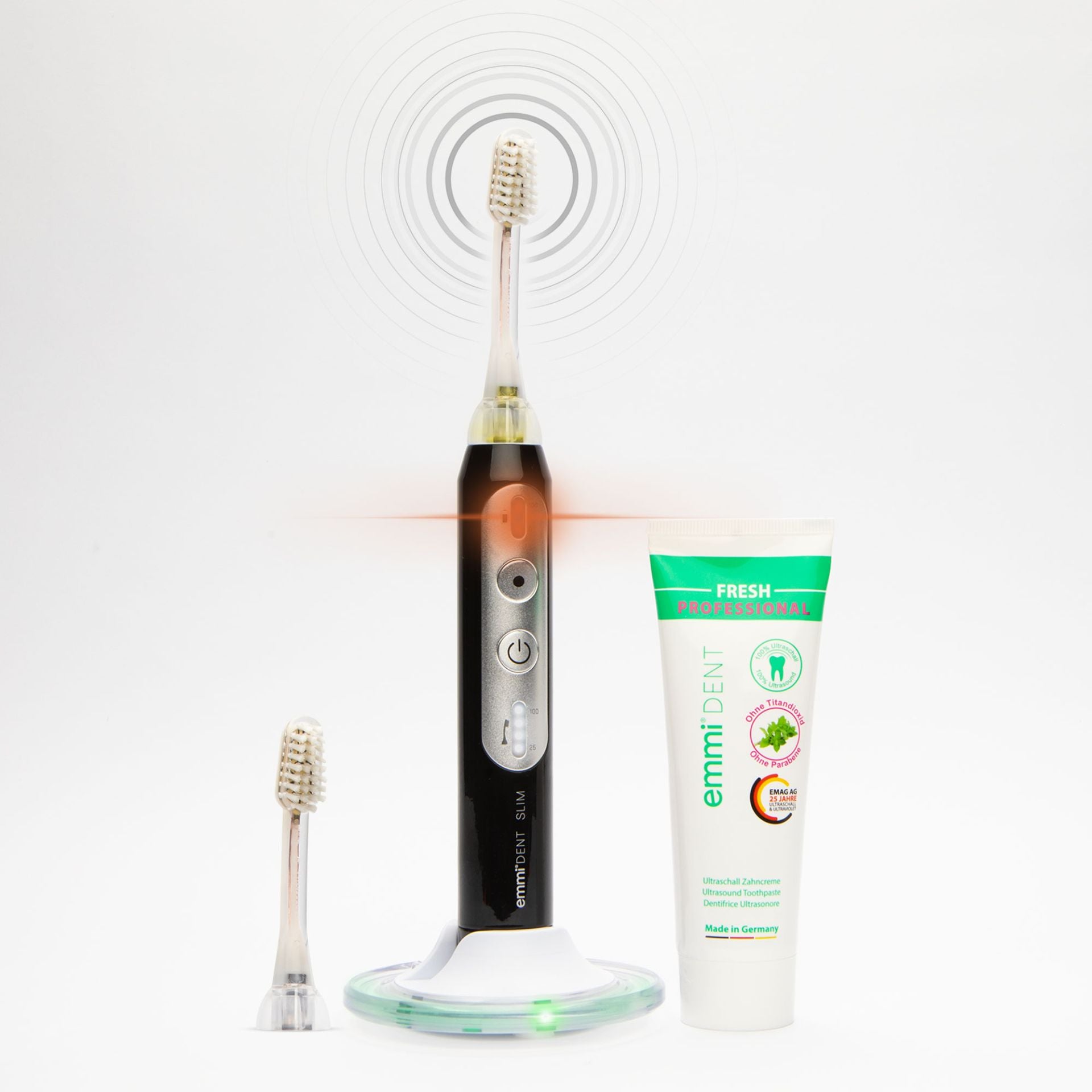
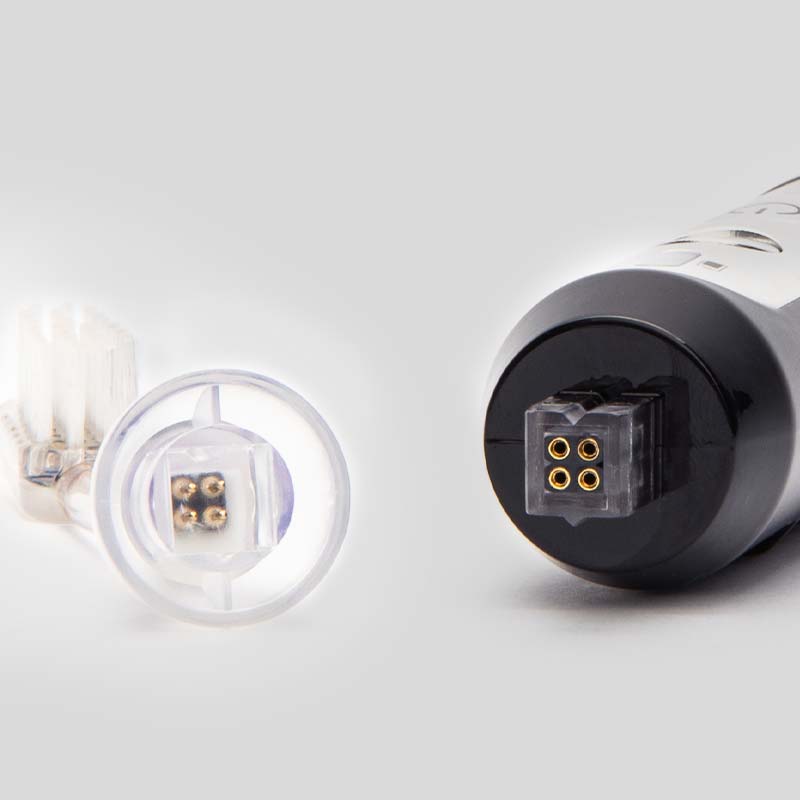
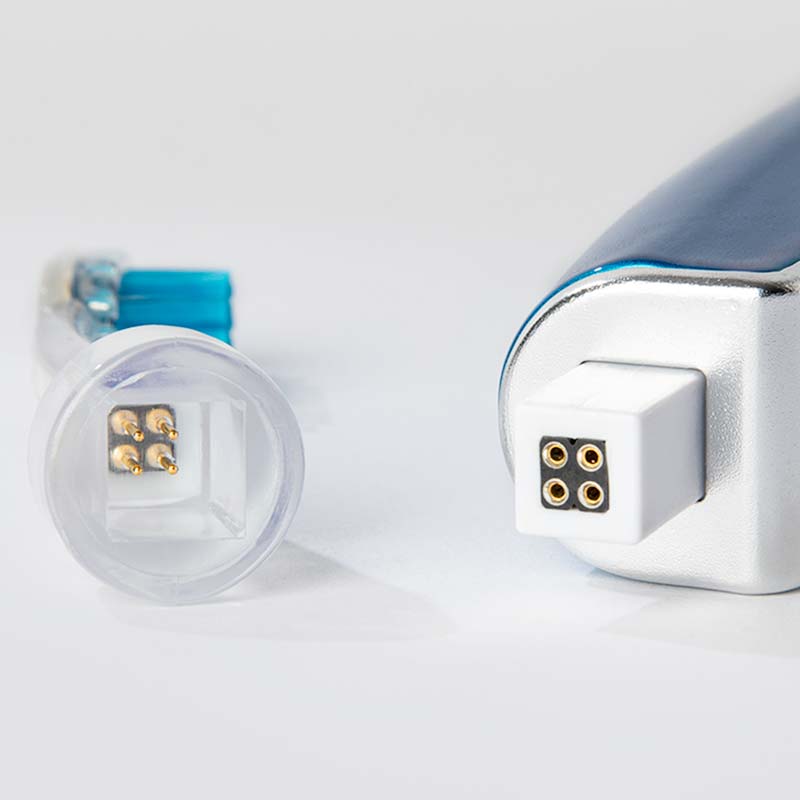
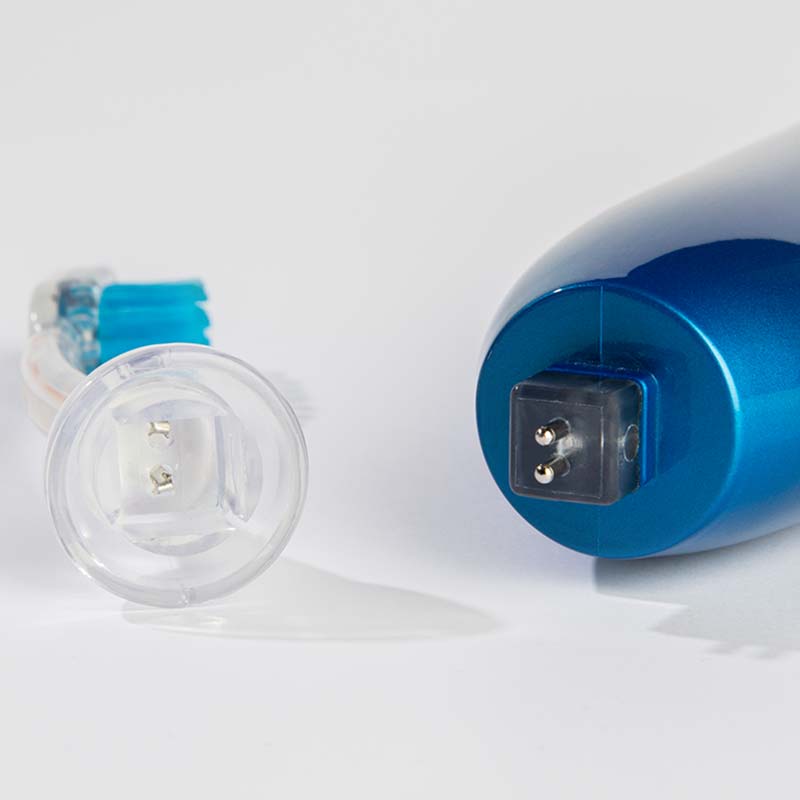
If bacterial plaque is removed regularly and as gently as possible, this can support oral health. In addition to professional dental cleaning, our emmi-DENT Slim ultrasonic toothbrush can help to reduce bacterial plaque as part of daily oral care. However, it does not replace a dental examination or the professional diagnosis of possible causes.
The role of dry mouth and saliva for taste
Many people underestimate the importance of saliva. Yet it is much more than just a liquid that keeps the mouth moist. Saliva
- protects the oral mucosa,
- supports swallowing and speaking,
- neutralizes acids and contributes to
- bacteria not multiplying unhindered.
At the same time, it ensures that flavorings are dissolved and transported evenly to the taste buds. Only then can the brain correctly classify aromas. If the amount of saliva or its composition changes, the sense of taste can also change.
Dry mouth often develops insidiously. Not drinking enough is just one of many possible causes. Stress, aging, certain medications, or breathing through the mouth can also lead to less saliva being produced. Many sufferers initially only notice a slight feeling of dryness or feel the need to drink a sip of water more frequently. Paradoxically, it is precisely this water that often no longer tastes as neutral as usual. Some describe the taste as metallic, others as bitter or dull. In addition, there is often a sticky feeling in the mouth, difficulty swallowing, or a rough feeling on the tongue.
Sufficient fluid intake can help support saliva production. Careful oral hygiene is also useful, as bacterial plaque can multiply more easily with a dry mouth and additionally stress the natural balance. Our emmi-DENT Slim ultrasonic toothbrush can support you in your daily oral hygiene by helping to gently reduce bacterial plaque. At the same time, it remains important for you to have the actual cause of persistent dry mouth clarified, especially if the symptoms persist for a longer period or further symptoms appear.
Other possible causes for a changed water taste
It is not always exclusively the oral cavity that is behind a suddenly changed taste sensation. The entire body can also influence how water is perceived. Temporary infections, hormonal changes, or certain medications can change the sense of taste. Some antibiotics, blood pressure medications, or preparations for allergies are known to cause a metallic or bitter taste as a possible side effect. The sense of taste can also change temporarily after dental treatments or the insertion of new fillings.
In addition, gingivitis or other diseases in the oral cavity can play a role. Inflamed gums often bleed more easily and can cause a metallic taste in connection with blood components. A heavily coated tongue can also change taste stimuli, as many bacteria settle there. Therefore, it is worthwhile to keep an eye not only on the teeth but on the entire oral cavity.
If the symptoms persist for several days or weeks or if additional pain, bleeding, swelling, or other abnormalities occur, a dental or, if necessary, medical examination should be carried out. Only there can it be determined with certainty whether harmless changes in the oral flora are present or whether a treatable cause is behind the changed taste. Regular oral care supports oral health but does not replace professional diagnosis or treatment.
What you can do yourself if water suddenly tastes different
A changed water taste does not immediately have to be a cause for concern. Often, small changes in everyday life are enough for the natural sense of taste to normalize again. First, it is important to consciously perceive your own body. Does the metallic or bitter taste only occur temporarily or does it repeatedly appear over several days? Does it only occur with tap water or does mineral water also taste unusual? These observations can help to narrow down the cause.
Also, make sure to drink enough. Good fluid supply supports saliva production and helps keep the oral mucosa moist. At the same time, it is worth taking a look at daily oral hygiene. In addition to thorough cleaning of the teeth, tongue care also plays an important role, as many bacteria can settle there. A balanced diet and avoiding excessive tobacco or alcohol can also help maintain the natural balance in the mouth.
Regular and as gentle as possible removal of bacterial plaque can additionally support oral health. Our emmi-DENT ultrasonic toothbrushes are used by many people as a supplement to daily oral care and can help reduce bacterial plaque. They can thus contribute to a well-maintained oral cavity but do not replace professional dental cleaning or regular check-ups at the dentist's office.
If the changed taste persists despite good oral care or if additional complaints such as dry mouth, bleeding gums, pain, swelling, or difficulty swallowing occur, the cause should be clarified by a dentist or doctor. Especially if the sense of taste changes permanently or suddenly appears without a recognizable reason, a professional examination is useful.
When water loses its usual taste
Water is one of the foods we usually drink as a matter of course. That is why it quickly becomes noticeable when it suddenly tastes metallic, bitter, or unusual. In many cases, the cause is not in the water itself but in changes in the oral cavity. Dry mouth, an altered oral flora, or bacterial plaque can affect the sense of taste and lead to even tasteless water being perceived differently.
Careful oral hygiene, sufficient fluid intake, and regular dental check-ups contribute to supporting oral health in the long term. If changes in the sense of taste occur only for a short time, they often normalize by themselves. However, if they persist longer or are accompanied by further complaints, the cause should be professionally clarified. This allows early detection of whether harmless changes in the oral cavity are present or whether targeted treatment is necessary. A healthy oral flora forms an important basis for water to taste again as it should: fresh, neutral, and pleasant.