














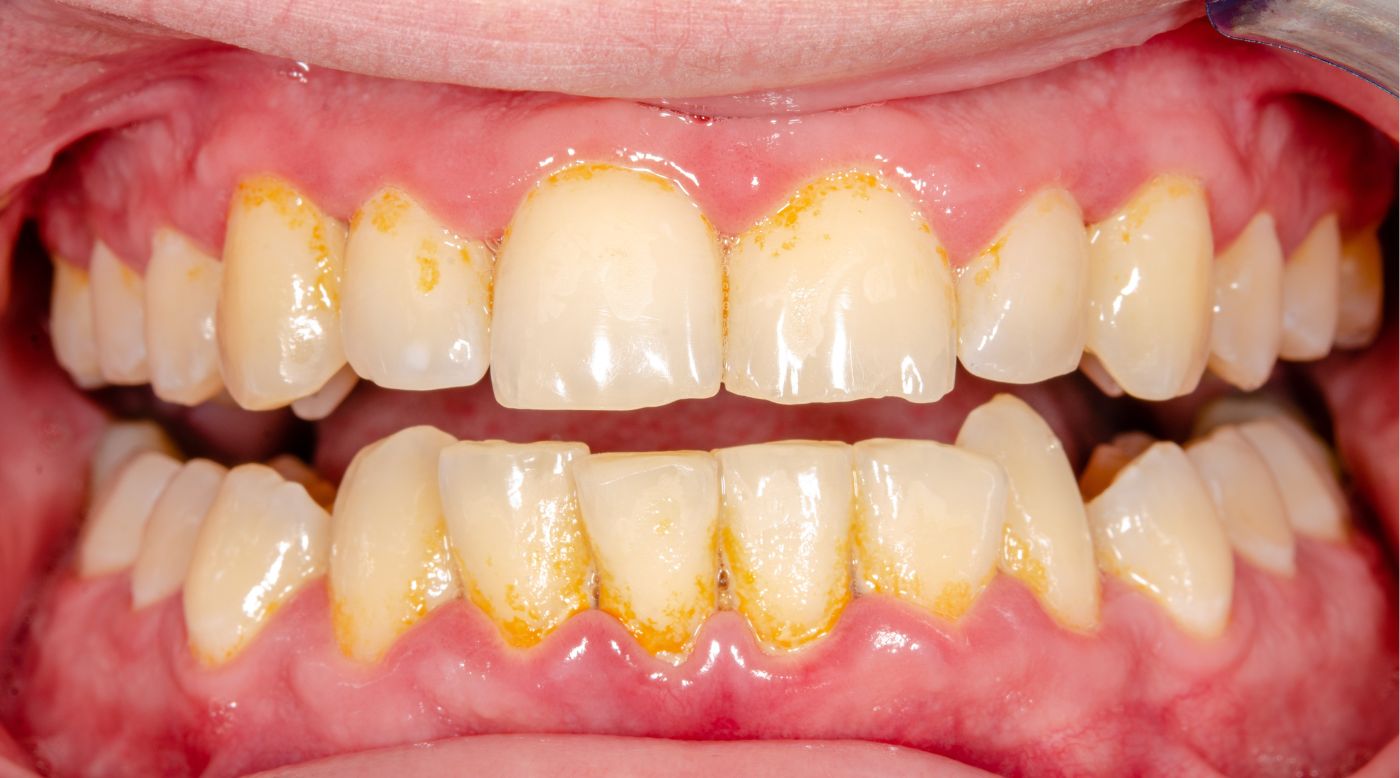
Many people suddenly discover darker spots between their teeth when they look in the mirror. Often, the immediate question is whether it's already tartar. Discoloration is particularly noticeable in the interdental spaces because these areas are harder to see and simultaneously more difficult to clean.
However, not every discoloration is automatically tartar. In fact, different types of deposits can form, ranging from soft plaque and superficial stains to hard tartar. For laypeople, the difference is often difficult to discern, which makes uncertainty understandable.
The good news is that many changes are initially harmless and can be positively influenced by adjusted oral hygiene. At the same time, it's worth taking a closer look. Because deposits between the teeth can indicate that certain areas are not being optimally reached during daily dental care.
In this article, we explain why interdental spaces can become discolored, how you can distinguish harmless plaque from tartar, and what options there are to specifically prevent deposits.
Why do interdental spaces get discolored at all?
The interdental spaces are among the areas that are particularly challenged during daily oral hygiene. While the visible tooth surfaces are usually well-reached during brushing, the narrow spaces often remain more difficult to access. This is precisely why plaque can accumulate more easily there.
Shortly after brushing, a thin biofilm of salivary components and bacteria forms on the tooth surfaces. This is initially a completely natural process. However, if these deposits are not removed regularly, other substances can accumulate. These include colorants from coffee, tea, red wine, or certain foods. Nicotine can also contribute to visible discoloration.
Such deposits often persist longer, especially in the interdental spaces, because less mechanical cleaning takes place there. Over time, the deposits can become darker and thus more noticeable. Many people then automatically suspect tartar, although initially only superficial discoloration or softer plaque is present.
Individual tooth alignment also plays a role. Closely spaced teeth or hard-to-reach gaps further promote the accumulation of plaque. Therefore, discoloration can occur even in people who brush their teeth regularly and thoroughly.
What is the difference between plaque, stains, and tartar?
When interdental spaces become discolored, the terms plaque, stains, and tartar are often confused. These are different phenomena that have various causes and are treated differently.
Soft plaque consists mainly of bacteria, salivary components, and food debris. It continuously forms on the tooth surfaces and can usually be removed well with thorough oral hygiene. If these deposits are not removed regularly, they can solidify and serve as a basis for further deposits.
Stains, on the other hand, often arise from colorants in food and drinks. Coffee, black tea, red wine, curry, or nicotine are among the best-known triggers. These colorants preferentially accumulate in areas that are difficult to reach with daily cleaning. Therefore, interdental spaces and areas along the gum line are frequently affected.
Tartar, in turn, forms when soft plaque hardens due to minerals from saliva. The deposits become firm and can no longer be removed with a normal toothbrush. Tartar often forms in places where plaque has been allowed to accumulate for a long time. It provides bacteria with additional adhesion possibilities and should be professionally removed regularly.
For many people, the difference is barely visible to the naked eye. Dark discolorations often look similar to tartar. Therefore, it is often only during a dental check-up that it can be reliably determined what type of deposit it actually is.
What habits promote deposits between the teeth?
The formation of plaque and stains depends not only on daily dental care. Various daily habits also influence how quickly deposits can form.
Cleaning the interdental spaces plays an important role. Many people brush their teeth regularly and thoroughly but only occasionally clean the areas between their teeth. It is precisely there that bacteria and plaque can settle particularly easily. Since a classic toothbrush can only reach these areas to a limited extent, deposits often remain for longer.
Eating habits also have an influence. Those who regularly consume coffee, tea, red wine, or highly coloring foods can develop visible stains over time. This does not mean that these foods must be avoided. However, colorants can more easily adhere to existing plaque.
Additionally, the composition of saliva plays a role. Some people are more prone to tartar formation than others due to individual factors. Therefore, differences can appear even with comparable dental care.
Smoking is also one of the factors that can significantly promote discoloration. The substances contained preferentially adhere to rougher surfaces and existing plaque. This often makes deposits visible more quickly.
Many of these influences act over months or years. Discoloration and tartar therefore usually do not appear suddenly but develop gradually. This is precisely why initial changes are often only noticed when they have already become clearly visible.
How can you effectively care for interdental spaces?
Caring for the interdental spaces is one of the most important measures to prevent plaque, discoloration, and tartar formation. Precisely these areas are often underestimated in daily oral hygiene, although a large part of bacterial deposits can accumulate there.
Thorough cleaning begins with the awareness that the toothbrush alone cannot reach every spot in the mouth. Especially narrow spaces pose a challenge for many brushes. Therefore, supplementary cleaning of the areas between the teeth is recommended. This way, deposits can be removed before they solidify or mineralize.
General oral hygiene is equally important. If bacterial plaque is regularly reduced, the likelihood of firmer deposits developing from it in the long term decreases. Many people therefore pay attention to cleaning their teeth as thoroughly and gently as possible.
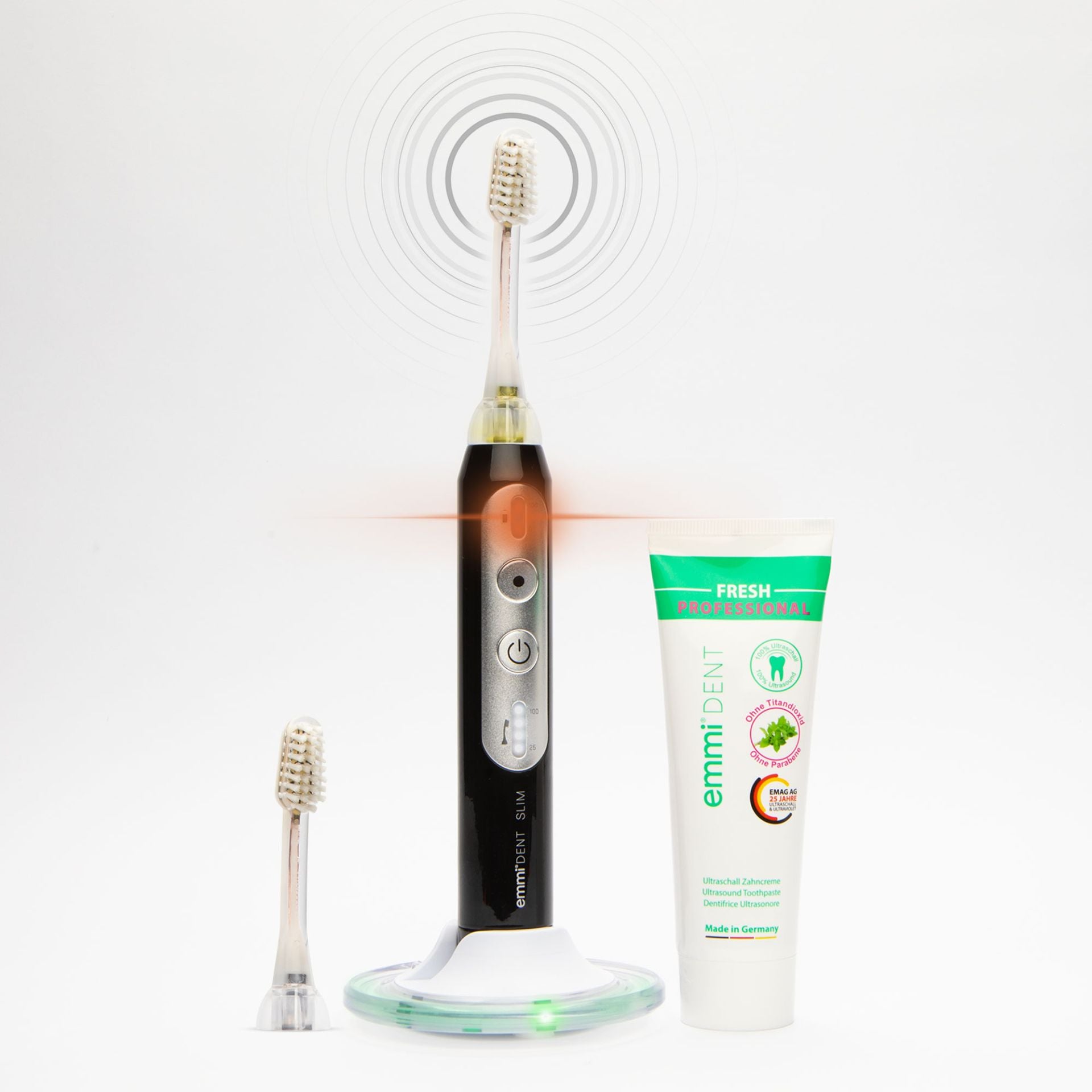
In this context, many users are interested in the differences between sonic toothbrushes and ultrasonic toothbrushes. Classic sonic toothbrushes clean primarily through fast mechanical brushing movements. Ultrasonic toothbrushes, on the other hand, work with ultrasonic technology and require significantly less mechanical movement on the tooth surface.
Our emmi-dent Slim Ultrasonic Toothbrush is used by many people as a supportive measure to reduce bacterial plaque as part of daily oral care. Especially for people who value the gentlest possible cleaning, this can be an interesting approach. Nevertheless, it remains true: even a modern toothbrush does not replace regular cleaning of the interdental spaces and professional dental check-ups.
Additionally, regular water consumption, a balanced diet, and reducing strongly staining luxury foods can help to slow down the formation of new discolorations.
When should you have discolorations professionally examined?
Not every discoloration between the teeth is automatically a problem. Nevertheless, there are situations in which a professional assessment is advisable. This applies in particular if deposits do not change despite good oral hygiene or increase over time.
Since tartar cannot be removed with home dental care, a dental examination should be carried out if suspected. There, it can usually be quickly determined whether it is soft plaque, superficial discoloration, or already hardened deposits.
Also, if additional gum bleeding, bad breath, or irritated gums occur, a closer examination is worthwhile. Such accompanying symptoms can indicate that bacterial plaque is already affecting gum health.
Regular check-ups offer the opportunity to detect changes early. Many deposits are much easier to treat at an early stage than after a long time. At the same time, you receive a professional assessment of which measures are appropriate for your individual oral situation.
Discoloration in the interdental spaces does not automatically mean that tartar is already present. Often, it is initially soft plaque or superficial discoloration caused by dyes from food, drinks, or other everyday influences. Those who know the differences and pay attention to thorough cleaning of the interdental spaces can contribute a lot to prevention. If deposits persist or additional complaints occur, a dental examination provides clarity and helps to reliably classify the cause.