

For many, a packed lunch is an integral part of their daily routine. Whether at school, in the office, or on the go, it's quick to prepare, convenient to take along, and gives you energy for the day. However, rarely do people consider the impact this seemingly simple meal has on their teeth.
In this article, we explain how closely the topic of packed lunches and dental health are actually connected, which foods support your teeth, and which can unconsciously harm them. At the same time, you'll get a sense of how you can prepare your meal so that it not only fills you up but also contributes to stable oral health in the long term.
Because just like with dental care, the same applies here: It's not individual decisions, but your daily habits that make the difference.
Why your packed lunch directly impacts your dental health
When you think about dental health, your toothbrush probably comes to mind first. Maybe floss or mouthwash too. Diet often plays only a minor role, although it has an enormous impact in everyday life.
This is mainly because your mouth reacts directly to what you eat. Every food temporarily changes the environment in your mouth. Sugary or highly processed products can cause bacteria to multiply faster and create acids that attack tooth enamel.
But even seemingly "harmless" foods can play a role. Especially with packed lunches, it's less about individual ingredients and more about the combination and how they interact in the mouth. A packed lunch can be both tooth-friendly and detrimental to your teeth.
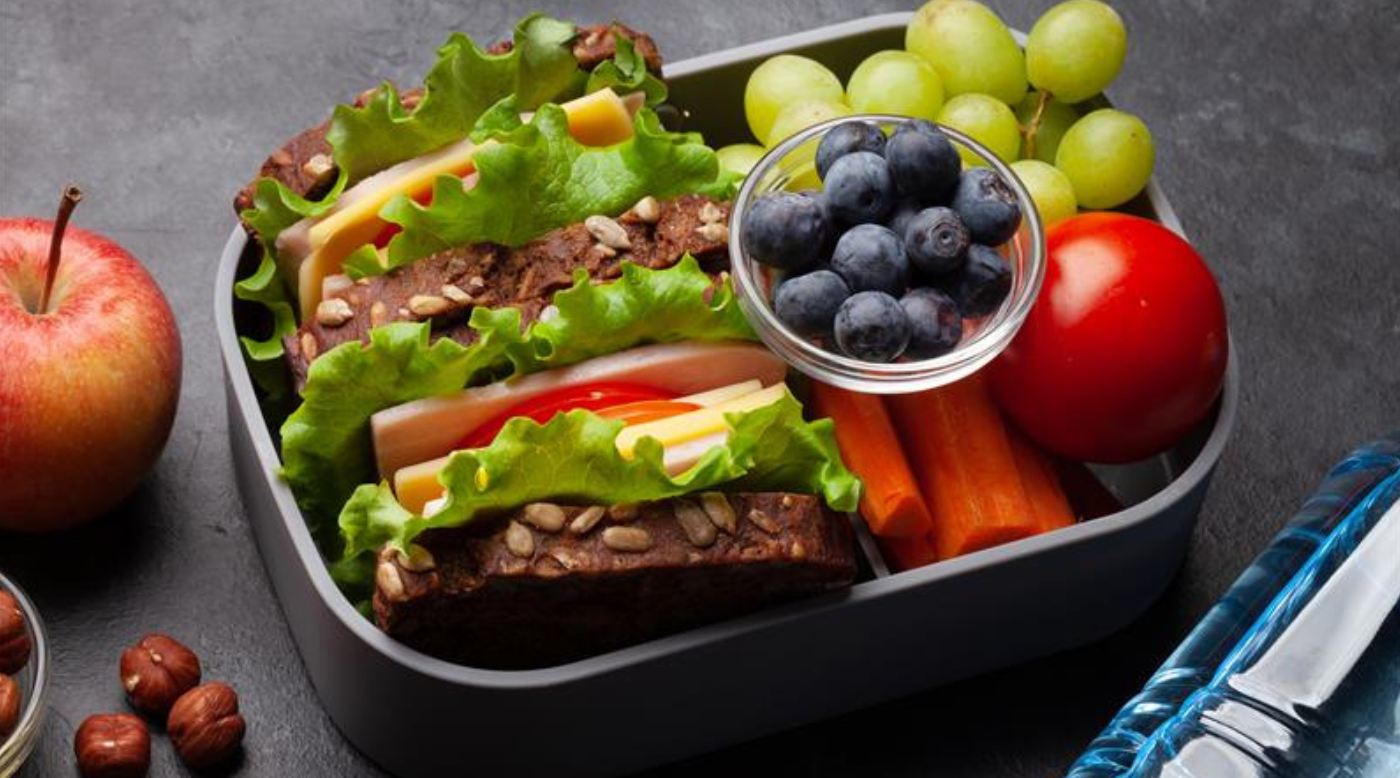
A soft, highly processed bread with sweet spreads adheres longer to the teeth and provides an ideal breeding ground for bacteria. In contrast, a packed lunch with firm textures, fresh ingredients, and little added sugar can help keep your mouth more stable.
Another important factor is frequency. If you snack frequently throughout the day, your mouth remains constantly in a state where acids can form. Your saliva has less time to restore balance.
Especially for children, but also in stressful everyday work life, packed lunches are often eaten on the side. Quickly, without conscious chewing, perhaps combined with sweet drinks. This is precisely where unconscious habits develop that can have long-term effects on your dental health.
Therefore, it's worth taking a conscious look at the topic of packed lunches and dental health. Not to do everything perfectly, but to understand small adjustments that can make a big difference in everyday life.
Is bread good for your teeth – a question many underestimate
The question "is bread good for your teeth" seems simple at first glance, but the answer is more nuanced than many expect. Bread is not just bread, and that's precisely the crucial point.
Whole grain bread, for example, has a different structure than highly processed white bread. It requires more intense chewing, stimulates saliva flow, and often remains on the tooth surfaces for a shorter time than sticky, soft varieties. This can even be beneficial for your mouth.
Soft bread, on the other hand, especially in combination with sweet or sticky toppings, can more easily get stuck between teeth. If these residues are not removed, they provide an ideal breeding ground for bacteria. So, it's not the bread itself that's decisive, but its texture and what you make of it.
The topping also plays a central role. Fresh ingredients like vegetables or protein-rich components interact differently in the mouth than sugary spreads or highly processed foods. They influence not only the taste but also the reaction of your mouth.
Another point is chewing itself. Intensive chewing promotes saliva production, which has an important protective function. Saliva helps neutralize acids and stabilize the oral environment.
How a healthy packed lunch can truly support your dental health
If you consciously put together your packed lunch, you'll quickly realize that it's less about strict rules and more about a fundamental understanding. A healthy packed lunch is not created by individual "perfect" ingredients, but by a combination that relieves your oral cavity and remains suitable for everyday use.
A good starting point is the choice of bread itself. Varieties with a firmer structure, such as whole grain or multi-grain bread, have the advantage of requiring more intensive chewing. This chewing is more than just a mechanical process. It stimulates your saliva flow, and this saliva plays a crucial role in your dental health. It helps neutralize acids and quickly transport away residues.
Building on this, it's worth taking a look at the topping. Fresh components like vegetables not only bring nutrients but also provide additional structure when chewing. They thus indirectly support the self-cleaning of your oral cavity. At the same time, they generally contain less sugar and sticky components than many processed alternatives.
The situation is different with highly sugary or very soft toppings. They can stick more easily to the teeth and often remain longer in the interdental spaces. This is precisely where the challenge arises, because these residues can form a basis for bacterial processes. So, a healthy packed lunch is not complicated, but consciously put together.
If you ensure that your bread has a firm structure, your topping is as natural as possible, and you take your time when eating, you are already creating a very good foundation for your packed lunch dental health in everyday life.
Packed lunch and braces – what you should pay particular attention to
If you wear braces, your entire oral cavity changes. Additional surfaces, edges, and crevices are created where food residues can accumulate. This is precisely why the choice of your packed lunch becomes even more important in this situation.
Foods that are very sticky or very soft can more easily get caught on brackets or wires. This not only leads to an uncomfortable feeling but also makes subsequent cleaning difficult. Especially in everyday life, when you're on the go or don't have an immediate opportunity to brush your teeth, this can quickly become a challenge.
Therefore, a packed lunch for braces should be chosen so that it is easy to chew, does not stick excessively, and leaves no unnecessary residues. Firm textures and fresh ingredients are often the better choice here.
At the same time, it is important to develop a feeling after eating whether anything has gotten stuck between your teeth or on your braces. It is precisely in such moments that the importance of a conscious routine becomes apparent. Because with braces, it is often not enough to simply brush when you get home. It's more about keeping an eye on your oral cavity in between and understanding how certain foods affect it.
Dental care after lunch – what really helps in everyday life
You don't always have the opportunity to brush your teeth immediately after your packed lunch. This is precisely where a gap arises in everyday life between eating and your usual dental care. This gap is completely normal, but should be consciously acknowledged.
After eating, your oral cavity changes temporarily. The pH value drops, bacterial processes intensify, and residues can accumulate. Your body immediately begins to counteract this, primarily through saliva production. But this process takes time.
During this phase, you can support your body by giving your mouth a rest. This means, for example, not eating again immediately or constantly snacking. This gives your saliva the opportunity to restore balance.
When you later perform your dental care, it is worth proceeding particularly consciously. Especially after a long day when you've eaten on the go, thorough yet gentle cleaning is crucial.
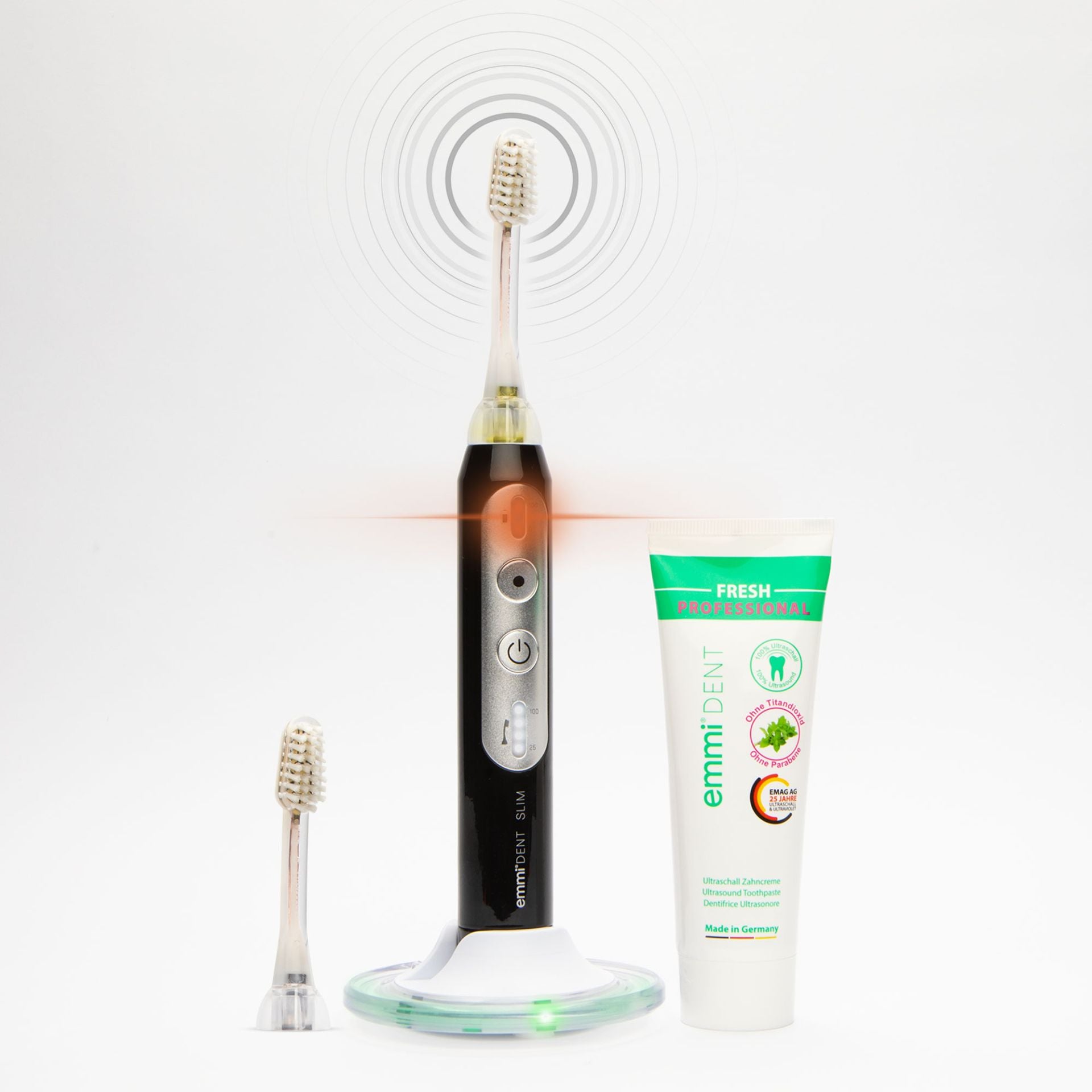
Our emmi-dent Slim ultrasonic toothbrush can support you here. It enables gentle cleaning without additional pressure and helps reduce bacteria even in hard-to-reach areas. This is particularly helpful when residues have accumulated during the day.
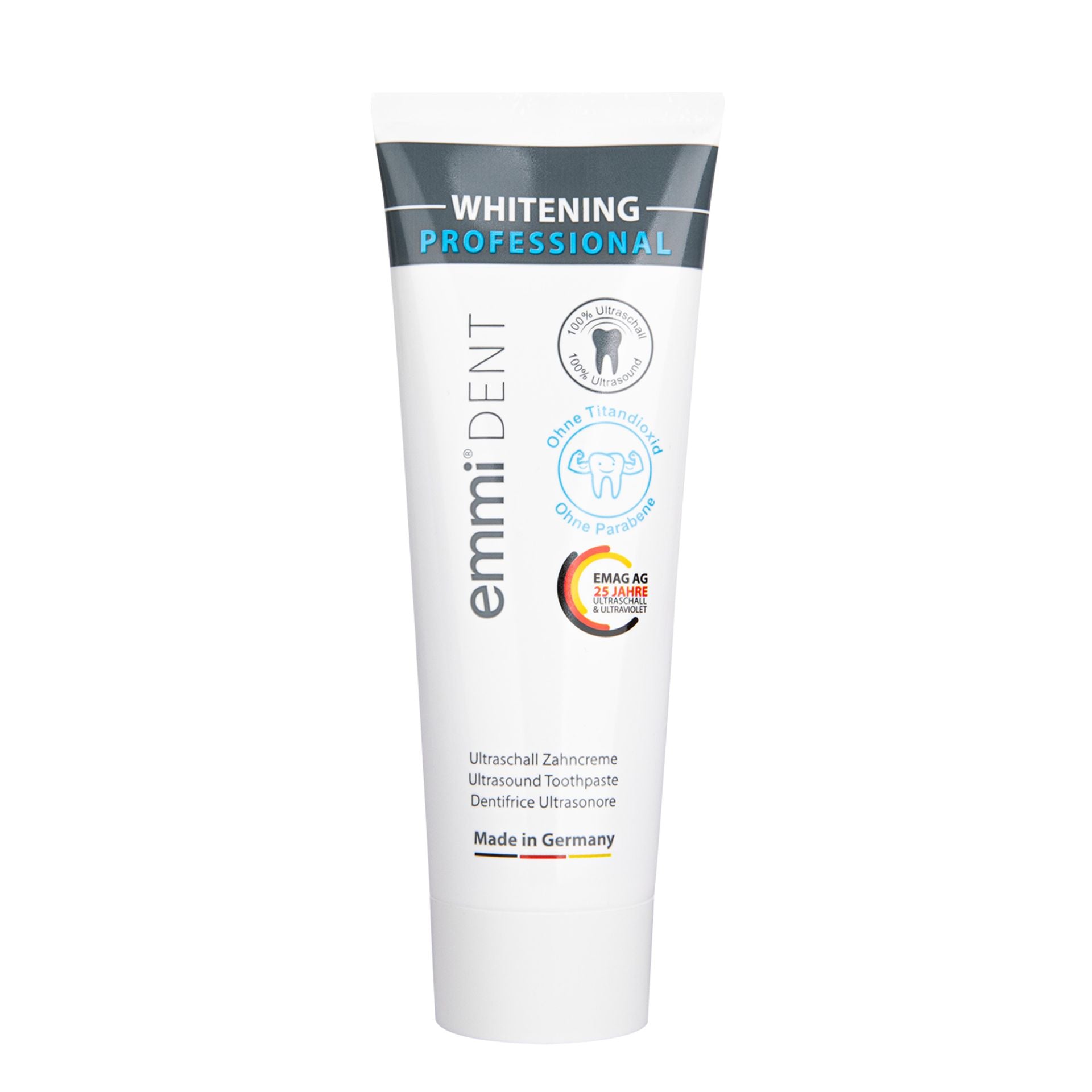
In combination with our well-thought-out care concepts such as the emmi-dent Slim White Teeth Set or the emmi-dent Platinum Nature Set, you can build your routine so that it is not only thorough but also sustainably effective for your oral cavity. It's not about doing more, but about cleaning more consciously and eating more consciously.